


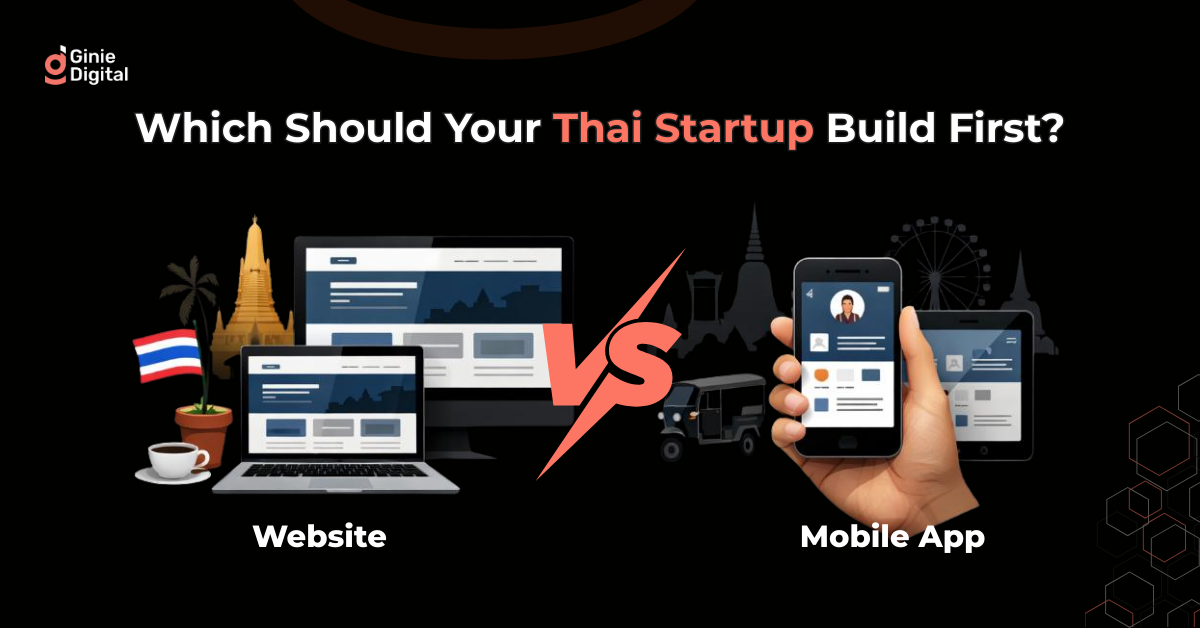
Every Thai startup begins with a strong idea. The challenge comes when it is time to bring that idea online. Some founders rush into development, only to realize later that the platform choice slowed growth or drained budgets. Others take a more strategic path and gain traction faster.
This decision usually comes down to one question: mobile app vs website. The initial access point influences how customers are exposed to the services and builds trust along the way. In Thailand’s mobile-first digital market, this choice matters more than ever.
The goal of this guide is to point out what Thai startups need to think about when they are making an informed decision whether to build a mobile app or a website, helping founders make a confident, growth-focused decision.
Understanding How Thai Audiences Engage Online
Thailand is a highly mobile-driven market in Southeast Asia. The mobile phone is deeply embedded in how Thai customers shop, pay, book, and even communicate. Conversely, websites play a crucial role in the discovery phase and brand trust creation.
When evaluating a mobile website vs mobile app for a Thai startup, user behavior must come first:
- New users often find brands through Google search
- Returning users prefer fast, app-based experiences
- Trust builds faster when information is easy to access
This context sets the foundation for comparing a mobile app vs website in a practical way.
What a Website Offers Thai Startups
A website is often the first digital touchpoint for a startup. It is accessible, flexible, and easier to scale in early stages.
Key advantages of starting with a website
- Lower development and maintenance costs
- Easy access via Google search
- Faster updates and content changes
- Works across all devices
For startups comparing building website vs building a mobile app, a website often provides a quicker route to market validation. It allows businesses to explain their offerings clearly and attract organic traffic.
It is for this reason that many founders, when deciding how to make a website or a mobile app, often start with a website to test their ideas.
Technology Works Best When the Strategy Comes First
A mobile app offers a more personalized and engaging experience. It works best when users return frequently.
Benefits of choosing a mobile app
- Faster performance for repeat users
- Push notifications for engagement
- Better personalization
- Offline access to some features
When comparing a mobile website vs mobile app for a Thai startup, apps are powerful for loyalty-driven models like food delivery, fintech, or fitness platforms. However, the cost and time involved are higher.
This is where building website vs building a mobile app becomes a strategic decision rather than a technical one.
Cost and Time: A Reality Check for Startups
Budget constraints influence most early decisions. Websites generally cost less and launch faster.
The mobile app experience is more personalized and interactive. It requires development, testing, and updates in each of the platforms.
For founders weighing whether to build a mobile app or a website, the difference matters:
- Websites: faster launch, lower upfront investment
- Mobile apps: higher cost, longer development cycle
This comparison is central to mobile app vs website planning, especially for startups seeking quick market entry.
SEO, Visibility, and Growth Potential
Search visibility is a major growth driver in Thailand. Websites rank on Google. Mobile apps do not—at least not in the same way.
For startups learning how to make a website or mobile app, SEO plays a decisive role. A website allows:
- Organic traffic from Google
- Content marketing opportunities
- Local SEO and Google Business visibility
This makes building website vs building a mobile app more favorable in the early stages when brand awareness is still low.
User Experience: First-Time vs Repeat Users
First-time users usually prefer websites. They want information without downloads. Repeat users prefer apps for speed and convenience.
This difference defines a mobile website vs mobile app for a Thai startup:
- Websites attract new users
- Apps retain existing users
This knowledge will enable the founder to make the decision whether to build a mobile app or a website first. Otherwise, one might end up developing both.
Maintenance, Updates & Scalability
Websites are easy to maintain. Some guidelines must be adhered to in developing apps.
When evaluating a mobile app vs website, startups should consider:
- Speed of updates
- Ongoing maintenance costs
- Platform dependency
For teams still learning how to make a website or mobile app, websites offer flexibility without technical bottlenecks.
When Should a Thai Startup Choose a Website First?
A website is usually the best first step when:
- The startup needs visibility and leads
- The business model is still evolving
- SEO and content marketing matter
- The budget is limited
In these cases, building website vs building a mobile app favors websites for stability and reach.
When Does a Mobile App Make More Sense?
A mobile app becomes ideal when:
- Users interact daily
- Personalization is essential
- Push notifications drive engagement
- Offline access adds value
In this case, a mobile website vs mobile app for a Thai startup prefers apps, especially if demand is already validated through a website.
Why Having a Plan Matters More Than the Tools
Many successful startups adopt a step-by-step approach:
- Launch a website to build visibility
- Validate the product and audience
- Invest in a mobile app once demand is clear
This strategy helps navigate the choice between a mobile app vs website without unnecessary risk.
It also simplifies the decision to build a mobile app or a website by turning it into a timeline rather than a conflict.
Conclusion
The question of mobile app vs website has no universal answer. Ultimately, the best solution depends on the audience that is being addressed.
For the majority of Thai startups, building from a website provides awareness and flexibility. A mobile app becomes valuable later, once users are ready to engage more deeply. Understanding a mobile website vs mobile app for a Thai startup helps founders avoid costly mistakes and build sustainably.